The description outline is as follows:
- model
- LogicalTerminationPoint.js
- LayerProtocol
- TcpServerInterface.js
- HttpServerInterface.js
- OperationServerInterface.js
- TcpClientInterface.js
- HttpClientInterface.js
- OperationClientInterface.js
- Profiles
- Services
- LogicalTerminationPointService.js
- ForwardingConstructServices.js
- Utility
- ONfAttributeFormatter.js
- LogicalTerminationPointService.js
Back to Application Pattern Documentation

(top ↑) This class provides a stub for ONF core-model. This class consolidates the technology specific extensions and provides functionality to manipulate the attributes in the core-model.
Field summary:
| Type | Field |
|---|---|
| String | uuid |
| JSONarray of LogicalTerminationPoint | logicalTerminationPointList |
| JSONarray of forwardingDomain | forwardingDomainList |
| JSON object of profileCollection | profileCollection |
Method Summary:
| Method and description | Input parameters | Return type |
|---|---|---|
| getUuid This function returns the uuid of core-model instance. |
{promise} returns uuid. | |
| createLogicalTerminationPoint This function adds a new logical-termination-point instance to the logical-termination-point list. |
{JSONObject} logicalTerminationPoint an instance of the logical-termination-point. | {promise} returns true if the instance is added successfully to the logical-termination-point list. |
| deleteLogicalTerminationPoint This function deletes an instance from the logical-termination-point list. |
{String} uuid of the logical-termination-point instance that needs to be deleted. | {promise} returns true if the instance is deleted successfully from the logical termination point list. |
| getLogicalTerminationPoint This function returns an instance from the logical-termination-point list for the provided uuid. |
{String} uuid of the logical-termination-point instance that needs to be retrieved. | {promise} returns the logical-termination-point instance. |
| getLogicalTerminationPointList This function returns the list of logical-termination-point instances for the provided layer-protocol-name. |
{String} layerProtocolName protocol name of the layer. | {promise} returns logical-termination-point instance list. |
| getForwardingDomainList This function returns the entire forwarding-domain list inside the core-model. |
{promise} returns forwarding-domain list. |
(top ↑) The LogicalTerminationPoint (LTP) class encapsulates the termination and adaptation functions of one or more technology specific layers represented by instances of LayerProtocol. This class provides a stub to instantiate and generate a JSON object for a LogicalTerminationPoint.
Field summary:
| Type | Field |
|---|---|
| String | uuid |
| ltpDirectionEnum (SINK,SOURCE) | ltpDirection |
| Array of uuid | clientLTP |
| Array of uuid | serverLTP |
| JSON object of layerProtocol | layerProtocol |
Constructor summary:
| Constuctor and description | parameters |
|---|---|
| This instantiates a new logicalTerminationPoint instance. | {String} uuid unified resource identifier for the httpClient. {String} ltpDirection direction of the LTP, it will be SINK for clients and SOURCE for servers. {String} clientLTP client LTPs ((operation-client/server) associated with http-client/server, ((http-client/server) associated with tcp-client/server)). {String} serverLTP server LTPs ((tcp-client/server) associated with http-client/server, ((http-client/server) associated with operation-client/server)). {String} layerProtocol an instance of the LayerProtocol class. |
Method Summary:
| Method and description | Input parameters | Return type |
|---|---|---|
| getServerLtpList This function returns the server-ltp list for the given logical-termination-point uuid. |
{String} uuid of the logical-termination-point. | {promise} returns the server-ltp list of the LTP. |
| getClientLtpList This function returns the client-ltp list for the given logical-termination-point uuid. |
{String} uuid of the logical-termination-point. | {promise} returns the client-ltp list of the LTP. |
| setClientLtpList This function modifies the client-ltp list for the given logical-termination-point uuid. |
{String} uuid of the logical-termination-point. {array} clientUuidList array of client uuids that needs to be updated. |
{promise} returns true if the value is updated otherwise false. |
| setServerLtpList This function modifies the server-ltp list for the given logical-termination-point uuid. |
{String} uuid of the logical-termination-point. {array} serverUuidList array of client uuids that needs to be updated. |
{promise} returns true if the value is updated otherwise false. |
| getUuidListForTheProtocol This function returns the list of logical-termination-point uuid for the provided layer-protocol-name. |
{String} layerProtocolName protocol name of the layer. | {promise} returns logical-termination-point uuid List. |

(top ↑) The projection of an LTP into each technology specific layer is represented by a LayerProtocol (LP) instance. This class provides a stub to instantiate and generate a JSON object for a LayerProtocol.
Field summary:
| Type | Field |
|---|---|
| String | localId |
| String (OPERATION_CLIENT, HTTP_CLIENT, TCP_CLIENT, OPERATION_SERVER, HTTP_SERVER, TCP_SERVER) |
layerProtocolName |
Constructor summary:
| Constuctor and description | parameters |
|---|---|
| This instantiates a new layerProtocolName instance. | {String} localId local identifier for the layerProtocol. {String} layerProtocolName name of the layer protocol (it can be tcp-server, tcp-client, http-server, http-client, operation-server, operation-client). |
Method Summary:
| Method and description | Input parameters | Return type |
|---|---|---|
| getLayerProtocolName This function returns the layer-protocol-name for the given logical-termination-point uuid. |
{String} uuid of the logical-termination-point. | {promise} returns the layerProtocolName of the LTP. |
(top ↑) The ForwardingDomain (FD) class models the component that represents a forwarding capability that provides the opportunity to enable forwarding (of specific transport characteristic information at one or more protocol layers) between points.
Field summary:
| Type | Field |
|---|---|
| String | uuid |
| JSONarray of ForwardingConstruct | forwardingConstructList |
Constructor summary:
| Constuctor and description | parameters |
|---|---|
| This creates a new ForwardingDomain instance. | {String} uuid unique identifier of the forwarding-domain. {String} forwardingConstructList list of forwarding-construct. |
Method Summary:
| Method and description | Input parameters | Return type |
|---|---|---|
| getForwardingConstructForTheUuid This function returns the forwarding-construct instance for the given forwarding-construct uuid. |
{string} forwardingConstructUuid forwarding-construct uuid in the forwarding-construct list in forwarding-domain. | {promise} returns forwarding-construct instance. |
| getForwardingConstructList This function returns the entire list of forwarding-construct instances inside all forwarding domains. |
{promise} returns all forwarding-construct instance list. | |
| getForwardingConstructForTheFCName This function returns the forwarding-construct instance that matches the forwarding-construct name. |
{string} forwardingName forwardingName of the forwarding-construct. | {promise} returns forwarding-construct instance. |
| getForwardingConstructListForTheFcPortManagementDirection This function returns the forwarding-construct instance list for the fc-port management direction. |
{string} FcPortManagementDirectionUuid fc-port management direction logical-termination-point attribute value. | {promise} returns forwarding-construct instance list. |
| getForwardingConstructListForTheFcPortOutputDirection This function returns the forwarding-construct instance list for the fc-port output direction. |
{string} FcPortOutputDirectionUuid fc-port output direction logical-termination-point attribute value. | {promise} returns forwarding-construct instance list. |
(top ↑) The ForwardingConstruct class (FC) represents enabled constrained potential for forwarding between two or more FcPorts at a particular specific layerProtocol.
Field summary:
| Type | Field |
|---|---|
| String | uuid |
| JSONArray of key value pair | nameList |
| JSONArray of FCPort | fcPortList |
Constructor summary:
| Constuctor and description | parameters |
|---|---|
| This instantiates a new ForwardingConstruct instance. | {String} uuid unified resource identifier for the forwarding-construct. {String} nameList name list that holds the forwardingName and forwardingKind details. {String} fcPortList fcPort instance list. |
Inner class summary:
| Inner class and description | Field summary | Constructor summary |
|---|---|---|
| name This class provides stub for the name list. |
valueName (String) name (String) |
constructor (valueName, name) |
| FcPort This class provides stub to instantiate a fc-port. |
localId (String) portDirection (MANAGEMENT, INPUT, OUTPUT) logicalTerminationPoint (String) |
constructor (localId, portDirection, logicalTerminationPoint) |
Method Summary:
| Method and description | Input parameters | Return type |
|---|---|---|
| getForwardingNameForTheUuid This function returns the forwarding-construct/name/value-name=ForwardingName instance for the given forwarding construct uuid. |
{string} forwardingConstructUuid forwarding-construct uuid. | {promise} returns ForwardingName of the matched forwarding-construct. |
| getForwardingKindForTheUuid This function returns the forwarding-construct/name/value-name=ForwardingKind instance for the given forwarding construct uuid. |
{string} forwardingConstructUuid forwarding-construct uuid. | {promise} returns ForwardingKind of the matched forwarding-construct. |
| getFcPortOutputDirectionLogicalTerminationPointListForTheForwardingName This function returns the logical-termination-point(uuid) list of the fc-port in the output direction for the forwardingName. |
{string} forwardingConstructName forwarding construct name as in forwarding-domain/forwarding-construct/name/value-name. | {Promise} return the logical-termination-point(uuid) list of the fc-port in the output direction for the forwardingName. |
| getFcPortOutputDirectionLogicalTerminationPointListForTheFcPortInputDirection This function returns the logical-termination-point(uuid) list of the fc-port in the output direction for the input fcport. |
{string} fcPortLogicalTerminationPoint logical-termination-point of the fc-port input direction. {string} context if we want to filter the output fc-port for a specific application (for example to perform /embed-yourself only for the specific application). |
{Promise} return the logical-termination-point(uuid) list of the fc-port in the output direction for the input fcport. |
| getFcPortOutputDirectionLogicalTerminationPointListForTheUuid This function returns the logical-termination-point(uuid) list of the fc-port in the output direction for the forwarding-construct uuid. |
{string} forwardingConstructUuid forwarding-construct uuid. | {Promise} return the logical-termination-point(uuid) list of the fc-port in the output direction for the forwarding-construct uuid. |
| generateNextFcPortLocalId This function returns the next available uuid for the fc-port based on the provided forwarding-construct uuid. |
{String} forwardingConstructUuid uuid of the forwarding-construct. | {promise} returns the next free uuid instance that can be used for the fc-port creation. |
| modifyFcPortLogicalTerminationPointUuid This function updates the logical-termination-point attribute of the fc-port. |
{String} forwardingConstructUuid uuid of the forwarding-construct. {String} fcPortLocalId local-id of the fc-port. {String} fcPortNewLogicalTerminationPoint new logical-termination-point that needs to be updated. |
{promise} returns true if the value is updated. |
| isFcPortExists This function returns true if a fc-port is already available for the provided logical-termination-point of an operation(client/server) Uuid |
{String} forwardingConstructUuid uuid of the forwarding-construct {String} operationUuid logical-termination-point of an operation(client/server) Uuid |
{promise} returns true if a fc-port is already available. |
| getFcPortLocalId This function returns the fc-port local-id for the provided logical-termination-point of an operation |
{String} forwardingConstructUuid uuid of the forwarding-construct {String} operationUuid logical-termination-point of an operation(client/server)Uuid |
{promise} returns the fc-port local-id. |
| addFcPort This function adds a Fc port to the forwarding-construct |
{String} forwardingConstructUuid uuid of the forwarding-construct {String} fcPortLocalId local-id of the fc-port {String} fcPortDirection direction of the fc-port {String} fcPortLogicalTermincationPoint logical-termination-point of the fc-port |
{promise} returns true if the fc-port is added to the list. |
| deleteFcPort This function deletes a Fc port from the forwarding-construct |
{String} forwardingConstructUuid uuid of the forwarding-construct {String} fcPortLocalId fc-port local id |
{promise} returns true if the fc-port is added to the list. |
(top ↑) The ProfileCollection class models the component that represents profiles collection in the CoreModel.
Field summary:
| Type | Field |
|---|---|
| JSONArray of Profile | profileList |
Constructor summary:
| Constuctor and description | parameters |
|---|---|
| This instantiates a new ProfileCollection instance. | {JSONArray} profileList list of profiles. |
Method Summary:
| Method and description | Input parameters | Return type |
|---|---|---|
| getProfileInstanceForTheUuid This function returns an instance from the profile list for the provided uuid. |
{String} uuid of the profile instance that needs to be retrieved. | {promise} returns profile instance. |
| isProfileExists This function returns true if the profile uuid exists in the profile list. |
{String} profileUuid uuid of the profile instance that needs to be retrieved. | {promise} returns true if the profile uuid exists in the profile list. |
| getProfileList This function returns the profile list. |
{promise} returns profile instance. | |
| addProfile This function includes an instance to the profile list. |
{Profile} profileInstance profile instance to be included. | {promise} returns true if the operation is success. |
| deleteProfile This function deletes a profile. |
{String} profileUuid uuid of the profile. | {promise} returns true if the operation is successful. |
(top ↑) The Profile class models the component that represents a profile. New profile types can extend this class.
Field summary:
| Type | Field |
|---|---|
| String | uuid |
| String (APPLICATION_PROFILE, INTEGER_PROFILE, OAM_RECORD_PROFILE, SERVICE_RECORD_PROFILE, ADMIN_PROFILE) |
profileName |
Constructor summary:
| Constuctor and description | parameters |
|---|---|
| This instantiates a new profile instance. | {String} uuid unified resource identifier for the profile. {String} profileName name of the profile. |
Method Summary:
| Method and description | Input parameters | Return type |
|---|---|---|
| getUuidListForTheProfileName This function returns the list of profile uuid for the provided profile-name. |
{String} profileNameType name of the profile. | {promise} returns profile uuid List. |
(top ↑) This package consists of a list of sub classes for the layerProtocol class.
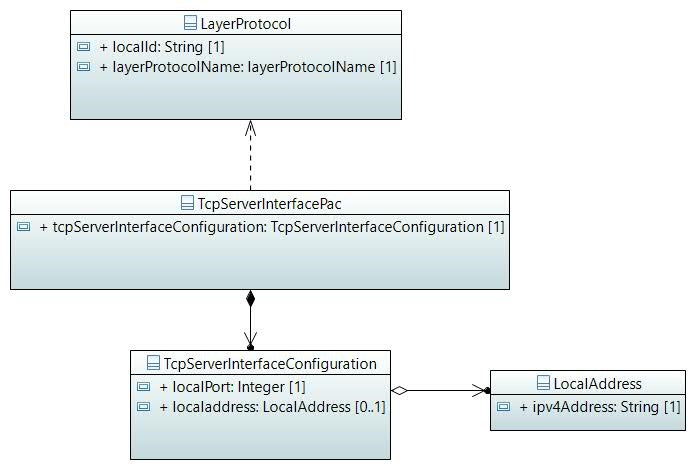
(top ↑) This class provides a stub to instantiate and generate a JSON object for a tcpServerInterface layer protocol. This class is a sub class for LayerProtocol. This class has the following model that represents the tcpServerInterfacePac:
 |
|---|
Constructor summary:
| Constuctor and description | parameters |
|---|---|
| This instantiates a new tcp server layer protocol. | {string} localAddress tcp server ipaddress where the application is hosted. {string} localPort tcp server port where the application is running. |
Method Summary:
| Method and description | Input parameters | Return type |
|---|---|---|
| getLocalAddress This function returns the IpV4 address of the current application. |
{promise} returns ip address of the current application. | |
| getLocalPort This function returns the port where the current application is running. |
{promise} returns the port where the current application is running. |
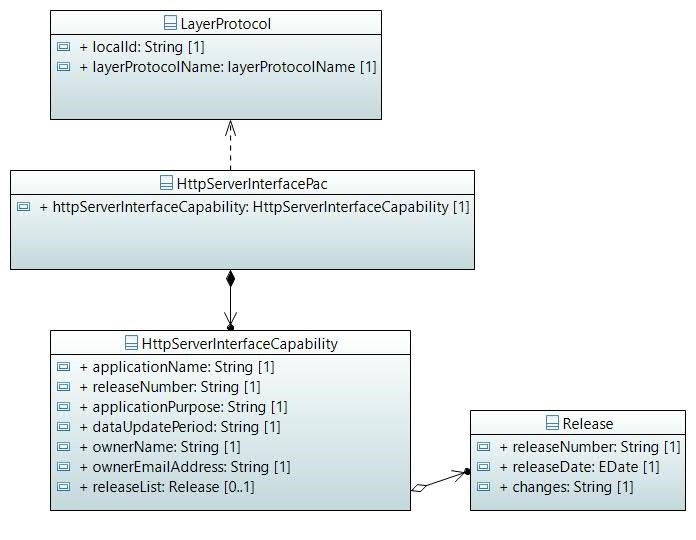
(top ↑) This class provides a stub to instantiate and generate a JSON object for a httpServerInterface layer protocol. This class is a sub class for LayerProtocol. This class has the following model that represents the httpServerInterfacePac:
 |
|---|
Constructor summary:
| Constuctor and description | parameters |
|---|---|
| This instantiates a new HTTP server layer protocol. | {string} applicationName name of the current application. {string} releaseNumber release number of the current application. {string} applicationPurpose purpose of the current application. {string} dataUpdatePeriod data update period can be 24hr, 1hr, manual or realtime. {string} ownerName name of the application owner. {string} ownerEmailAddress email address of the application owner. {string} releaseList release list of the application along with its history. |
Method Summary:
| Method and description | Input parameters | Return type |
|---|---|---|
| getHttpServerCapability This function returns the HTTP server capability. |
{promise} returns the capability of the HTTP server. | |
| getApplicationName This function returns the name of the current application. |
{promise} returns the name of current application. | |
| getReleaseNumber This function returns the release number of the current application. |
{promise} returns release number of current applications. | |
| getReleaseList This function returns the list of releases for the application. |
{promise} returns the release list of the application. |
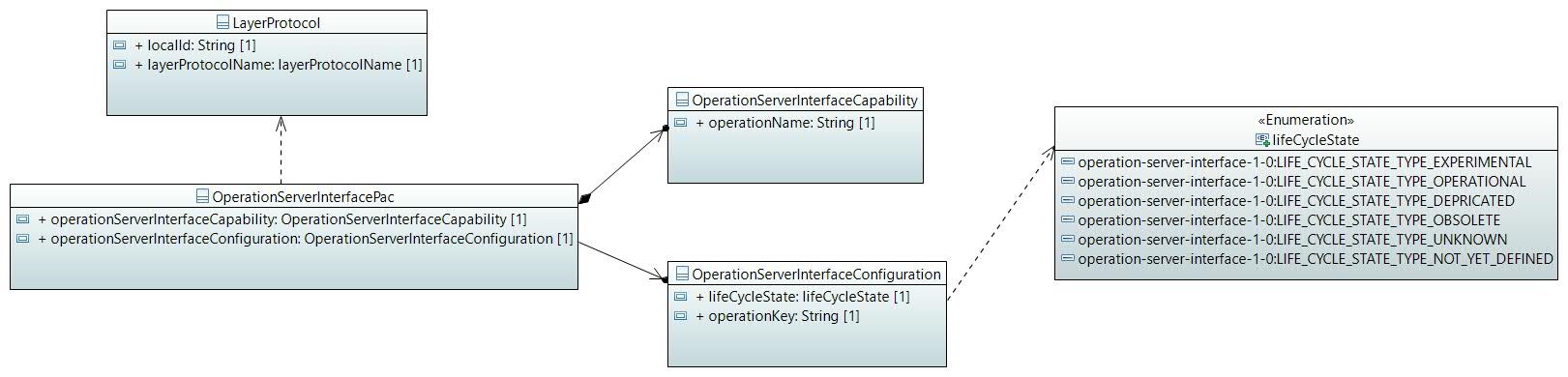
(top ↑) This class provides a stub to instantiate and generate a JSON object for an operationServerInterface layer protocol. This class is a sub class for LayerProtocol. This class has the following model that represents the operationServerInterfacePac:
 |
|---|
Constructor summary:
| Constuctor and description | parameters |
|---|---|
| This instantiates a new operation server layer protocol. | {String} operationName name of the operation. |
Method Summary:
| Method and description | Input parameters | Return type |
|---|---|---|
| getOperationName This function returns the operation name for the given operation server uuid. |
{String} operationServerUuid uuid of the operation server instance. | {promise} returns operation name of the operation server instance. |
| getOperationKey This function returns the operation key of the operation server. |
{String} operationServerUuid uuid of the operation server. | {promise} returns the operation key. |
| setOperationKey This function sets the operation key of the operation server. |
{String} operationServerUuid uuid of the operation server {String} operationKey operation key that needs to be updated. |
{promise} returns true if the operation is successful. |
| getLifeCycleState This function returns the life-cycle-state for the given operation server uuid. |
{String} operationServerUuid uuid of the operation server instance. | {promise} returns life-cycle-state of the operation server instance. |
| getOperationServerUuidFor TheOperationName This function returns the operation server uuid for the given operation name. |
{String} operationName operation name of the operation server. | {promise} returns operation server uuid. |
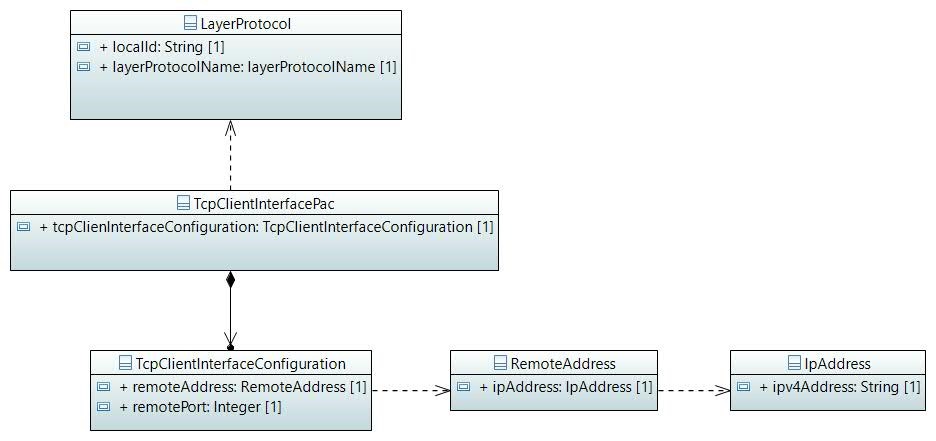
(top ↑) This class provides a stub to instantiate and generate a JSON object for a tcpClientInterface layer protocol. This class is a sub class for LayerProtocol. This class has the following model that represents the tcpClientInterfacePac:
 |
|---|
Constructor summary:
| Constuctor and description | parameters |
|---|---|
| This instantiates a new tcp client layer protocol. | {string} remoteAddress tcp ipaddress where the application is hosted. {string} remotePort tcp port where the application is running. |
Method Summary:
| Method and description | Input parameters | Return type |
|---|---|---|
| getTcpIpAddressAndPort This function returns the tcp ip address and port (in the format :) where the client application is running. |
{String} tcpClientUuid uuid of the tcp client. | {promise} returns tcp ip address and port (in the format :). |
| getRemoteAddress This function returns the tcp ip address where the client application is running. |
{String} tcpClientUuid uuid of the tcp client. | {promise} returns tcp ip address. |
| getRemotePort This function returns the tcp port where the client application is running. |
{String} tcpClientUuid uuid of the tcp client. | {promise} returns tcp port. |
| generateNextUuid This function generates the tcp-client uuid for the given http-client uuid. |
{String} httpClientUuid uuid of the http-client-interface logical-termination-point. | {promise} returns the tcp-client uuid generated for the given http-client uuid. |
| createTcpClientInterfaceAnd AddtoLogicalTerminationPoint This function creates a new tcp-client-interface and update the created instance to the logical-termination-point list. |
{String} httpClientUuid http-client uuid for the application for which we are going to create the tcp-client-interface. {String} tcpClientUuid tcp-client uuid to create the new tcp-client instance. {String} ipv4Address ipaddress where the application is hosted. {String} port where the application is running. |
{promise} returns true if the tcp-client interface is created. |
| setTcpRemoteAddressAndPortForTheUuid This function modifies the tcp-client remote-address and remote-port for the provided tcp client uuid. |
{String} tcpClientUuid uuid of the tcp-client. {String} remoteAddress that needs to be modified. {String} remotePort that needs to be modified. |
{promise} returns true if the value is updated or return false. |
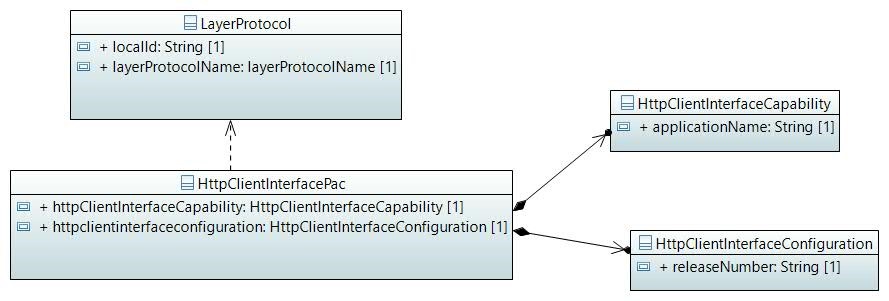
(top ↑) This class provides a stub to instantiate and generate a JSON object for a httpClientInterface layer protocol. This class is a sub class for LayerProtocol. This class has the following model that represents the httpClientInterfacePac:
 |
|---|
Constructor summary:
| Constuctor and description | parameters |
|---|---|
| This instantiates a new HTTP client layer protocol. | {string} applicationName name of the client application. {string} releaseNumber release number of the client application. |
Method Summary:
| Method and description | Input parameters | Return type |
|---|---|---|
| getApplicationName This function returns the application name for the HTTP client uuid. |
{String} httpClientUuid uuid of the http-client-interface. | {promise} returns the application name. |
| getReleaseNumber This function returns the release number for the HTTP client uuid. |
{String} httpClientUuid uuid of the http-client-interface. | {promise} returns the release number. |
| setReleaseNumber This function sets the release number for the HTTP client uuid. |
{String} httpClientUuid uuid of the http-client-interface. {String} newReleaseNumber new release number of the http-client-interface. |
{promise} returns true if the value is set. |
| generateNextUuid This function returns the next available uuid for the http-client-interface. |
{promise} returns the next free uuid instance that can be used for the http-client-interface ltp creation. | |
| getHttpClientUuidForTheApplicationAndReleaseNumber This function returns the uuid of the http-client-interface for the application-name and release-number. |
{String} applicationName name of the application. {String} releaseNumber release number of the application. |
{promise} returns HTTP logical-termination-point uuid or undefined incase if there is no match found. |
| getHttpClientUuidForTheApplicationName This function returns the uuid of the http-client-interface for the application-name and release-number. |
{String} applicationName name of the application. {String} releaseNumber release number of the application. |
{promise} returns HTTP logical-termination-point uuid or undefined incase if there is no match found. |
| createHttpClientInterfaceAndAddtoLogicalTerminationPoint This function creates a new http-client-interface and update the created instance to the logical-termination-point list. |
{String} httpClientUuid HTTP client unique identifier for the new application. {String} operationClientUuidList associated services for the application. {String} tcpClientUuid tcp client uuid that provides information about the ip address and portnumber of the application. {String} applicationName name of the application. {String} releaseNumber release number of the application. |
{promise} returns true if the http-client interface is created. |
OperationClientInterface.js
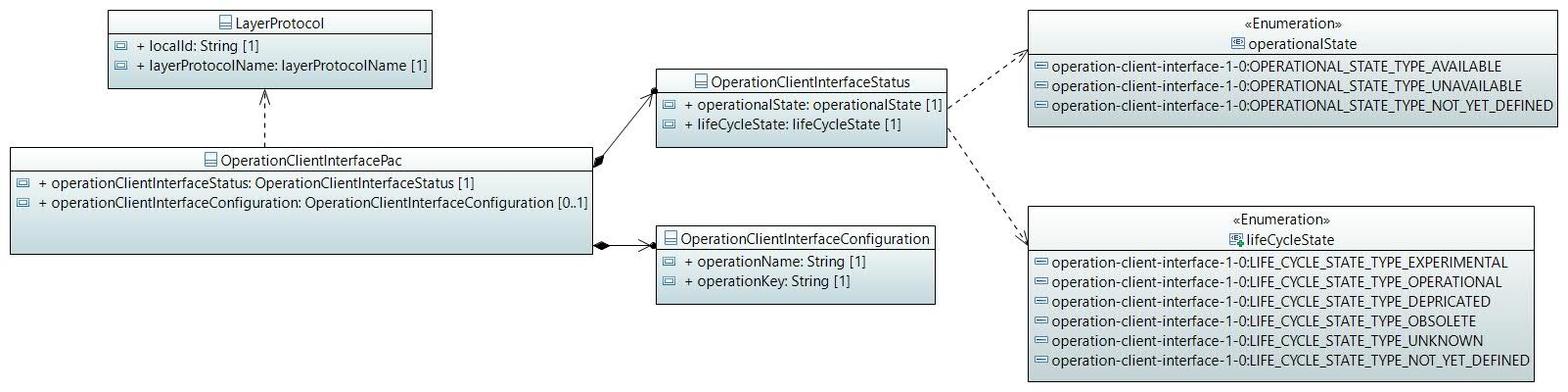
This class provides a stub to instantiate and generate a JSON object for an operationClientIInterface layer protocol. This class is a sub class for LayerProtocol. This class has the following model that represents the operationClientInterfacePac:
 |
|---|
Constructor summary:
| Constuctor and description | parameters |
|---|---|
| This instantiates a new operation client layer protocol. | {string} operationName operation name of the client |
| that needs to be called back. |
Method Summary:
| Method and description | Input parameters | Return type |
|---|---|---|
| getOperationName This function returns the operation name of the operation client. |
{String} operationClientUuid uuid of the operation client. | {promise} returns the operation name. |
| getOperationKey This function returns the operation key of the operation client. |
{String} operationClientUuid uuid of the operation client. | {promise} returns the operation key. |
| setOperationKey This function sets the operation key of the operation client. |
{String} operationClientUuid uuid of the operation client. {String} operationKey operation key that needs to be updated. |
{promise} returns true if the operation is successful. |
| getTcpIpAddressAndPortForTheOperationClient This function returns the tcp ip address and port where the application that provides the operation-client operation is running. |
{String} operationClientUuid uuid of the operation. | {promise} returns the tcp ip address and port where the application that provides the operation-client operation is running. |
| getOperationClientUuidFor TheOperationName This function returns the operation client uuid information for the given http-client uuid and operation name. |
{String} httpClientUuid uuid of the http-client. {String} operationName name of the operation. |
{promise} returns the operation client uuid for the operation name. |
| generateNextUuid This function generates the operation client uuid for the given HTTP client uuid and operation name. |
{String} httpClientUuid uuid of the HTTP client logical termination point. {String} operationName operation name of the operation client. |
{promise} returns the operation client uuid generated for the given HTTP uuid. |
| createOperationClientInterfaceAndAddtoLogicalTerminationPoint This function creates a new http-client-interface and update the created instance to the logical-termination-point list. |
{String} httpClientUuid http-client unique identifier for the new application in which the operation exists. {String} operationClientUuid operation-client uuid for the new operation. {String} operationName name of the operation. |
{promise} returns true if the operation-client interface is created. |
| setOperationNameForTheUuid This function modifies the operation name for the provided operation client uuid. |
{String} operationClientUuid uuid of the operation-client. {String} operationName name of the operation. |
{promise} returns true if the value is updated or return false. |
(top ↑) This package consists of a list of sub classes for the profile class.
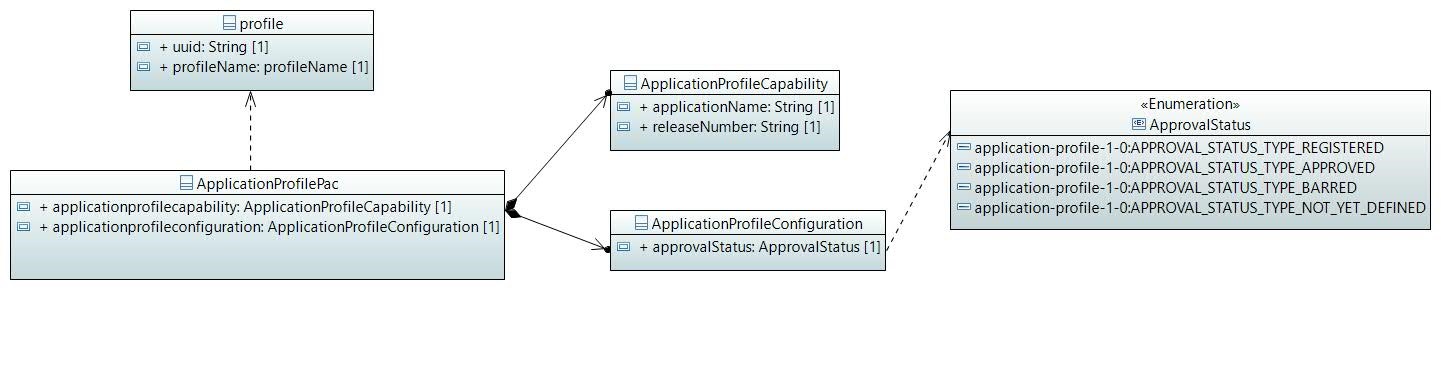
This class provides a stub to instantiate and generate a JSON object for a ApplicationProfile. This class is a sub class for profile. This Application profile is being utilized by TypeApprovalApplication to store the application's approval status. This class has the following model that represents the applicationProfilePac.
 |
|---|
Constructor summary:
| Constuctor and description | parameters |
|---|---|
| This instantiates a new application profile. | {string} applicationName name of the client application. {string} releaseNumber release number of the client application. {string} approvalStatus approval status of the client application. |
Method Summary:
| Method and description | Input parameters | Return type |
|---|---|---|
| getApprovalStatusForTheUuid This function returns the approval status for the provided application profile uuid. |
{String} uuid of the application profile. | {promise} returns the approval status. |
| getApplicationNameForTheUuid This function returns the application name for the provided application profile uuid. |
{String} uuid of the application profile. | {promise} returns the application name. |
| getApplicationReleaseNumberForTheUuid This function returns the application release number for the provided application profile uuid. |
{String} uuid of the application profile. | {promise} returns the application release number. |
| getApprovalStatus This function returns the approval status for the provided application and release number. |
{String} applicationName name of the application {String} releaseNumber release number of the application. |
{promise} returns the approval status. |
| getProfileUuid This function returns the approval status for the provided application and release number. |
{String} applicationName name of the application {String} releaseNumber release number of the application. |
{promise} returns the approval status. |
| isProfileExists This function returns true if a profile exists for the provided application and release number. |
{String} applicationName name of the application. {String} releaseNumber release number of the application. |
{promise} returns true if the profile exists. |
| setApprovalStatus This function sets the approval-status for the provided application-name and release-number. |
{String} applicationName name of the application. {String} releaseNumber release number of the application. {String} approvalStatus approval status of the application. |
{promise} returns true if the value is set. |
| createProfile This function creates a new application profile. |
{String} profileName name of the profile {array} profileAttributes list of attributes for the profile creation. |
{promise} returns uuid of the created profile. |
| generateNextUuid This function returns the next available uuid of the application-profile. |
{promise} returns the next free uuid instance that can be used for the application profile creation. |
(top ↑) This module provides functionality to manipulate the logical termination point. For example, to instantiate client instances for a new application in the LOADfile, this module provides a service called "createLogicalTerminationPointInstanceGroup" which will instantiate the tcp, http, operation client instances for the new application and updates it to the logical-termination-point list.
Function:
| Method and description | Input parameters | Return type |
|---|---|---|
| createLogicalTerminationPointInstanceGroup This function creates the tcp, http, operation client instances (if it doesn’t exist) and link them together. |
{String} applicationName name of the client application. {String} releaseNumber release of the client application. {String} ipv4Address ip address of the client application. {String} port of the client application. {array} operationList list of operation client that needs to be created. |
{object} operationClientUuid InformationInstance returns the generatedoperation client information. |
| updateLogicalTerminationPointInstanceGroup This function updates the tcp, http, operation client instances that linked together with the new values provided in the input |
{String} applicationName name of the client application {String} releaseNumber release of the client application {String} ipv4Address ip address of the client application {String} port of the client application {array} operationList list of operation client that needs to be created |
{promise} return true if the value is updated, otherwise returns false. |
| deleteLogicalTerminationPointInstanceGroup This function deletes the tcp, http, operation client for the provided application and release number |
{String} applicationName name of the client application {String} releaseNumber release of the client application |
{Promise} returns the deleted OperationClientLists associated to the application. |
ForwardingConstructServices.js
This module provides functionality to configure, unconfigure and automate the ForwardingConstruct.
Function:
| Method and description | Input parameters | Return type |
|---|---|---|
| configureAndAutomateForwardingConstruct This function configures the forwarding construct based on the provided new operation client information and automates the already existing forwarding construct. |
{String} serviceType service type can be basic or individual. {String} operationServerUuid operation server uuid of the request url. {String} forwardingConstructConfigurationList list of operation uuid along with the forwarding name that needs to be modified. {list} attributeList list of attributes required during forwarding construct automation (to send in the request body). {String} user who initiates this request. {string} xCorrelator flow id of this request. {string} traceIndicator trace indicator of the request. {string} customerJourney customer journey of the request. |
|
| unConfigureAndAutomateForwardingConstruct This function removes the configured operation clients in the forwarding construct based on the provided operation client information and automates the forwarding construct. |
{String} serviceType service type can be basic or individual. {String} operationServerUuid operation server uuid of the request url. {String} operationClientUuidLists list of operation client uuids that needs to be deleted. {list} attributeList list of attributes required during forwarding construct automation (to send in the request body). {String} user who initiates this request. {string} xCorrelator flow id of this request. {string} traceIndicator trace indicator of the request. {string} customerJourney customer journey of the request. |
(top ↑)
ONfAttributeFormatter.js
This module provides functionalities that converts the attributes to ONF CoreModel format.
Function:
| Method and description | Input parameters | Return type |
|---|---|---|
| modifyJSONObjectKeysToKebabCase This function modifies the JSON object keys from lower camelCase to kebabCase. |
{Object} JSONObject JSON object for which the keys need to be modified to kebabCase. | {Object} modified JSON object in kebabcase. |