English | Español
A cyber-physical edge sensing system implementing probabilistic sensor fusion, finite-state machine control, and distributed edge data persistence across heterogeneous hardware nodes.
This project demonstrates a complete end-to-end distributed sensing architecture: a microcontroller-based sensing node acquires and processes multi-modal sensor data in real time, transmits structured telemetry to a wireless MQTT gateway, and delivers it to an edge compute node for persistence, REST API exposure, and live dashboard visualisation.
Arduino Uno R3             Pico W               Pi Zero 2W
┌──────────────┐         ┌──────────┐         ┌────────────────┐
│ HC-SR04      │         │          │  MQTT   │ MQTT Subscriber│
│ PIR sensor   │─UART───▶│  WiFi   │────────▶│ SQLite store   │
│ Kalman filter│         │  gateway │         │ REST API       │
│ FSM + servo  │         │          │         │ SSE Dashboard  │
│ Buzzer       │         │          │         │                │
└──────────────┘         └──────────┘         └────────────────┘
   5V logic      HW-221    3.3V logic           <edge-ip>:5000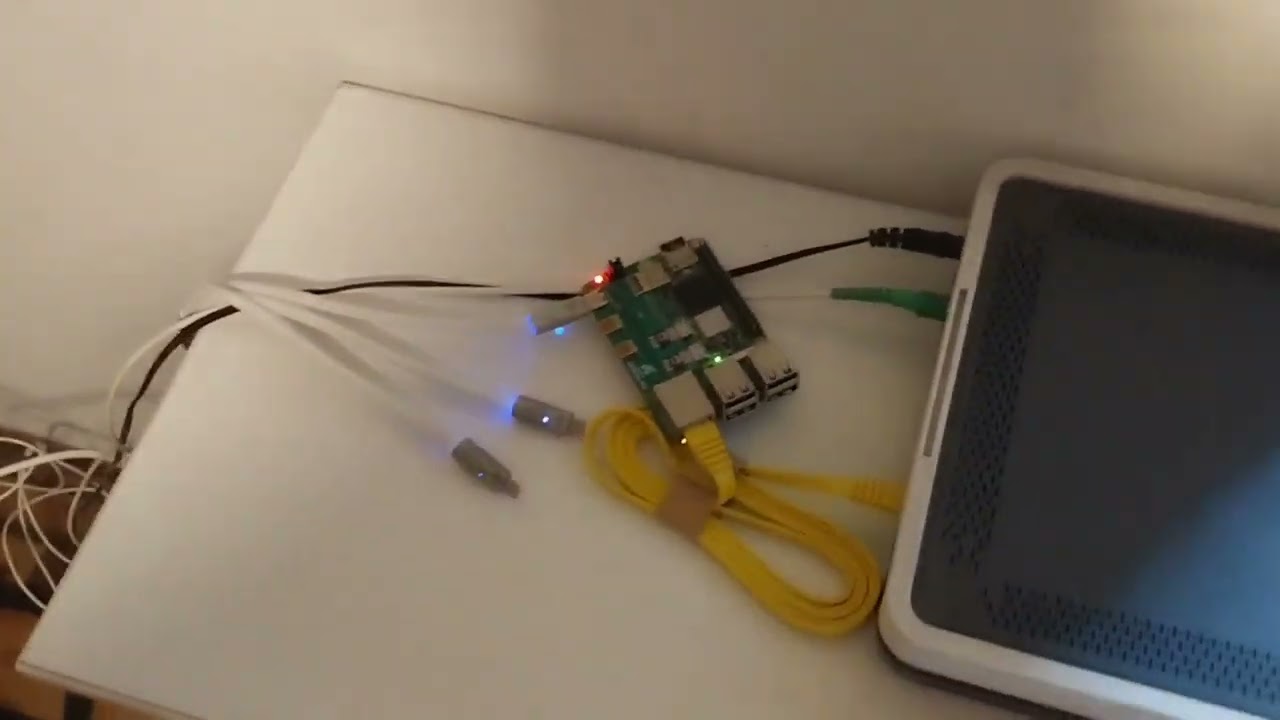
Probabilistic state estimation — A 1D Kalman filter runs directly on the Arduino to reduce ultrasonic measurement noise before state classification. Raw and filtered distances are both published, enabling downstream comparison of estimation quality.
Finite state machine architecture — System behaviour is structured as an explicit FSM with four states (LIBRE, MONITOREANDO, CERCA, PELIGRO). Transitions are driven by fused PIR and filtered ultrasonic inputs, producing deterministic and inspectable control logic.
Multi-modal sensor fusion — PIR (passive infrared) and ultrasonic sensing modalities are combined: PIR activates the monitoring pipeline, ultrasonic quantifies proximity. This two-stage detection pattern reduces false positives.
Distributed edge architecture — Telemetry flows across three physically distinct nodes over two transport layers (UART → MQTT/WiFi), with logic level translation (5V ↔ 3.3V) handled by a bidirectional HW-221 shifter.
Edge persistence and REST exposure — The Pi Zero 2W maintains a local SQLite time-series store and exposes telemetry via a Flask REST API, decoupling the sensing pipeline from any downstream consumer.
Real-time dashboard via SSE — A Server-Sent Events stream pushes each telemetry frame to a browser dashboard the moment it arrives, with FSM-state-aware colour coding and no polling required.
| Component | Role |
|---|---|
| Arduino Uno R3 | Sensing, Kalman filtering, FSM, actuation |
| HC-SR04 | Ultrasonic distance measurement |
| PIR sensor | Passive infrared motion detection |
| Servo (180°) | State-driven physical actuator |
| Active buzzer | Proximity alert |
| HW-221 shifter | 5V ↔ 3.3V logic level translation |
| Raspberry Pi Pico W | UART receiver, WiFi MQTT gateway |
| Raspberry Pi Zero 2W | Edge node: MQTT subscriber, SQLite, REST API |
| Pin | Function |
|---|---|
| 8 | HC-SR04 TRIG |
| 7 | HC-SR04 ECHO |
| 4 | PIR signal |
| 9 | Servo PWM |
| 2 | Buzzer |
| TX (1) | UART to Pico W via HW-221 |
| Pin | Function |
|---|---|
| GP0 (RX) | UART from Arduino via HW-221 |
| GP1 (TX) | UART to Arduino (reference only) |
| Topic | Type | Description |
|---|---|---|
dsplatform/sensor/distancia/raw |
float | Unfiltered ultrasonic reading (cm) |
dsplatform/sensor/distancia/filtrada |
float | Kalman-filtered estimate (cm) |
dsplatform/sensor/pir |
int | PIR motion detection (0 | 1) |
dsplatform/sensor/estado |
str | FSM state label |
                  PIR=0, dist > 50 cm
       ┌──────────────────────────────────┐
       │                                  ▼
  PELIGRO ◀── dist ≤ 20 cm ──── LIBRE ────────── MONITOREANDO
       │                           │  PIR=1, dist > 50 cm  │
       │                           │◀──────────────────────┘
       └──── dist > 20 cm ────▶ CERCA
20 cm < dist ≤ 50 cmBase URL: http://<edge-node-ip>:5000
GET /estado     → most recent telemetry frame
GET /lecturas   → last 100 frames (newest first)
GET /health     → service liveness check
GET /stream     → SSE stream of live telemetry
GET /dashboard  → real-time browser dashboard
Example response (/estado):
{
  "id": 1482,
  "timestamp": "2026-03-20T23:41:07.123456",
  "dist_raw": 34.21,
  "dist_filtered": 33.87,
  "pir": 1,
  "state": "CERCA"
}distributed-sensing-platform/
├── firmware/
│ ├── arduino/
│ │ └── sensing_node/
│ │ └── sensing_node.ino # Arduino C++ firmware
│ └── pico/
│ └── main.py # Pico W MicroPython gateway
├── edge-node/
│ ├── .python-version # Python version pin
│ ├── pyproject.toml # uv project definition
│ └── server.py # Flask REST API + MQTT subscriber + SSE dashboard
├── docs/
│ └── architecture.mermaid # System architecture diagram
├── README.md
└── README.es.mdOpen firmware/arduino/sensing_node/sensing_node.ino in Arduino IDE. The Servo library is bundled with the IDE. Select board Arduino Uno and upload.
Flash MicroPython v1.27 (Raspberry Pi Pico W variant) via Thonny. Install micropython-umqtt.simple from Thonny's package manager. Copy firmware/pico/main.py to the Pico root. Update the configuration constants at the top of the file:
WIFI_SSID     = "your_network"
WIFI_PASSWORD = "your_password"
MQTT_SERVER = "broker_ip"# Install uv
curl -LsSf https://astral.sh/uv/install.sh | sh
# Install dependencies and run
cd edge-node
uv sync
uv run server.pyUpdate MQTT_SERVER and DB_PATH in server.py before running.
Open the live dashboard at http://<edge-node-ip>:5000/dashboard.
Create mosquitto.conf:
listener 1883
allow_anonymous true
mosquitto -c mosquitto.conf -vEnsure port 1883 is reachable from all nodes on the local network.
- Arduino IDE 2.x
- Raspberry Pi Pico W with MicroPython v1.27+
- Python 3.12+ (edge node)
- uv
- Mosquitto 2.x (MQTT broker)
The Kalman filter parameters (Q=0.1, R=1.0) were tuned empirically for the HC-SR04 at indoor ranges. Increasing R produces smoother estimates at the cost of tracking latency; decreasing Q reduces responsiveness to rapid distance changes.
The FSM state boundaries (20 cm / 50 cm) and the two-stage PIR + ultrasonic detection pattern are designed to balance sensitivity against false-positive rate in a static indoor environment.
The SSE endpoint maintains a per-client queue and broadcasts each telemetry frame atomically. Disconnected clients are detected on the next broadcast and removed from the registry without blocking the MQTT worker thread.
- Welch, G., & Bishop, G. (2006). An Introduction to the Kalman Filter.
- Thrun, S., Burgard, W., & Fox, D. (2005). Probabilistic Robotics.
- HiveMQ. (2024). MQTT Essentials.
MIT