This project combines two powerful capabilities to simulate autonomous driving:
- Behavioral Cloning — A deep learning model that mimics human driving behavior by predicting steering angles from front camera images.
- Hazard Detection — A real-time object detection model (based on YOLOv8) that identifies potential road hazards such as pedestrians, vehicles, traffic signs, and more.
Together, these systems enable a basic autonomous driving agent to navigate a track while identifying and reacting to hazards in real time.
.
├── config.py                  # Hyperparameters and constants
├── model.py                   # Steering model (behavioral cloning)
├── hazard_detection.py        # YOLOv8-based hazard detection pipeline
├── drive.py                   # Integrates steering + hazard into simulator driving
├── load_data.py               # Data loader and augmentation functions
├── visualize_data.py          # Dataset visualization
├── visualize_activations.py   # Network activation map visualization
├── pretrained/                # Pretrained weights for both models
└── README.md
A Convolutional Neural Network (CNN) is trained to predict the steering angle of a car given a center camera image. Inspired by the NVIDIA paper, it takes preprocessed image frames and outputs a continuous steering value.
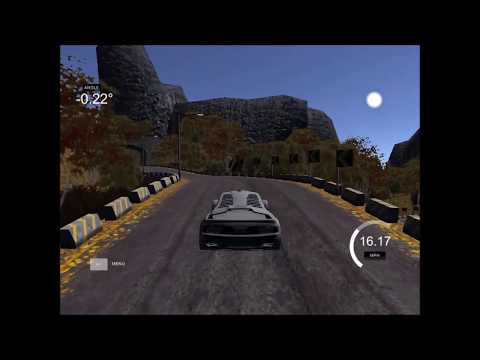
Below is a demo showcasing the behavioral cloning model controlling the simulated car based on real-time steering angle predictions:
- Cropping top (sky) and bottom (hood)
- Normalization to [-1, 1]
- Conversion to HSV with random brightness
- Random steering noise and horizontal flipping
- Use of left/right camera images with adjusted steering angles
- Brightness shifting (HSV V-channel)
- Normal noise on steering
- Biased data sampling to counter zero-steering skew

The network consists of:
- Input normalization (
Lambda) - 5 Conv2D layers with ELU activations and dropout
- 3 Dense layers with ELU activations and dropout
- 1 output layer with linear activation (steering)

This module detects real-time objects on the road including:
- 🚶♂️ Pedestrians
- 🚗 Vehicles
- 🚦 Traffic lights
- 🛑 Road signs
- 🐶 Animals (if present in training set)
The YOLOv8 model has been trained (or fine-tuned) on the BDD100K dataset and optimized for performance on real-time hardware.
- Runs in parallel with steering prediction
- Lightweight (YOLOv8n variant)
- Fast object tracking + class-wise suppression
- Works with real-time camera or simulator feed
- Behavioral Cloning: Udacity simulator data (8036 samples with 3 camera views + steering angle)
- Hazard Detection: BDD100K object detection dataset (YOLO format)
Behavioral Cloning:
- Optimizer: Adam
- Loss: MSE
- Dropout: 0.2–0.5
- Training time: ~2 hours (NVIDIA GPU)
Hazard Detection:
- YOLOv8n trained for 50 epochs
- Augmentations: grayscale, resize, crop, flip
- Custom data preprocessed and validated
To run the integrated system (steering + hazard detection):
python drive.py --steering_model pretrained/behavioral_model.h5 \
                --yolo_model pretrained/yolov8n.pt \
--source simulator_feedBelow are screenshots demonstrating hazard detection in action using the YOLOv8n model:


- ✅ The car drives smoothly on both training and test tracks
⚠️ Hazards are correctly detected in real-time without frame lag- 🔁 Pix2Pix-based style transfer can be used to simulate night driving (future scope)
- Predict throttle and braking along with steering
- Integrate lane detection for safer navigation
- Improve hazard priority ranking (e.g., pedestrian > traffic light)
- Combine with generative models to simulate edge cases (e.g., fog, night)
- Udacity for simulator and initial data
- Berkeley DeepDrive (BDD100K)
- Ultralytics for YOLOv8
- NVIDIA End-to-End Learning for Self-Driving Cars