









✨ I write simple, stupid and hence, readable "okay" codes with less WTFs/min from code reviews - mostly in Flutter, Node.js.
✨ Industries: Offshore IT Industry, Digital Agency, Health, Education, Finance.
Things you should know -
- 🔭 Currently working on: TypeScript & React Native
- 🌱 Getting better at: React Native, Flutter, Swift, Kotlin, Agile Software Development, Technical Product Management
- 📫 Reach me out: Shoot a mail at
⚡️ Languages






Level novice or no more worked


⚡️ IDE / Editor






⚡️ Data






⚡️ Frameworks / Platforms






⚡️ Tools










Worked (Alphabetical order)


⚡️ Github Status

📕 Latest Blog Posts
- Switching Between Multiple Claude Code Accounts (Bedrock SSO + Claude.ai Team)
- Data Architecture’s Secret Weapon – RX vs. Protobuf
- Modernizing Monorepo Architectures: Principles & Trade-offs
- A Comprehensive Guide to Flutter Widget Previews (Beta)
- Silence Isn't a Barrier: My System for Redesigning Tech Leadership
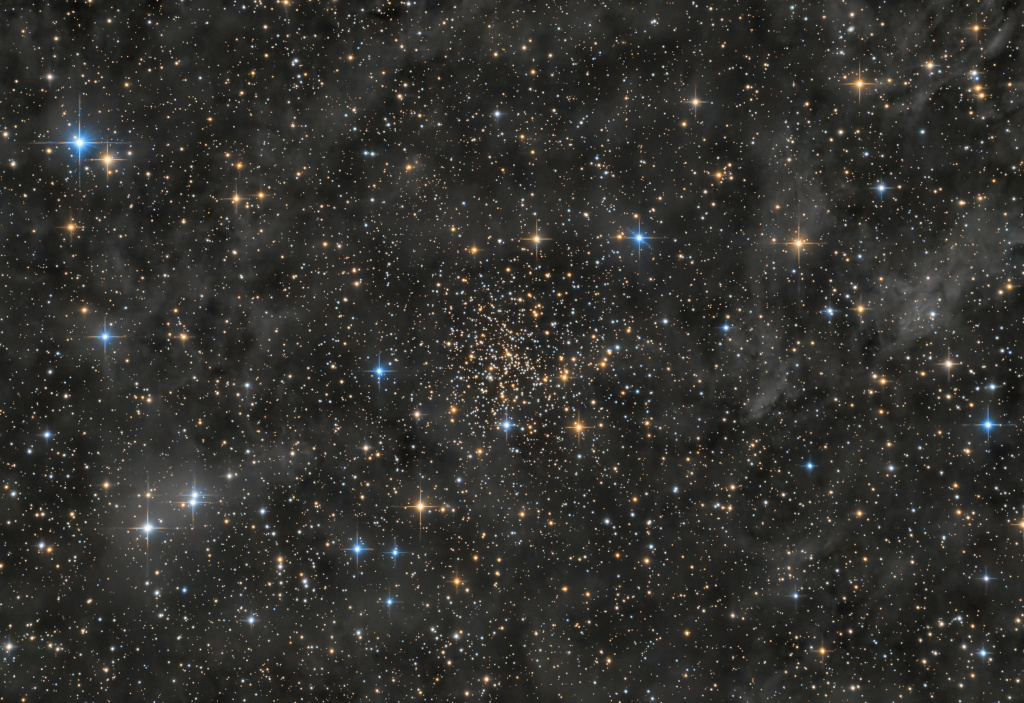
The New General Catalog of star clusters and nebulae really isn't so new. In fact, it was published in 1888 - an effort by J. L. E. Dreyer to consolidate the work of astronomers William, Caroline, and John Herschel along with others into a useful single, complete catalog of astronomical discoveries and measurements. Dreyer's work was largely successful and is still important today, as this famous catalog continues to lend its "NGC" to bright clusters, galaxies, and nebulae. Take for example the star cluster known as NGC 188 (item number 188 in the NGC compilation). It lies about 6,000 light-years distant in the northern constellation Cepheus and represents a galactic or open star cluster. With an age of about 7 billion years, NGC 188 is old for an open cluster. Its old, evolved red giant stars have yellowish hues in this colorful, deep sky view. NGC 188 also enjoys the designation Caldwell 1 in a modern compilation of deep sky objects. Located well above the plane of the Milky Way and seen in the direction of planet Earth's north celestial pole, the ancient stellar group is known to some as the Polarissima Cluster.
NASAI'm looking for sponsors to support my open source development, I appreciate your support! :)


